
language
Smart Warehousing Starts with Strong Structures: Why Rack Manufacturing Matters in Automated Storage Systems
24 Jun
As global supply chains continue to evolve, warehouse operators are facing increasing pressure to improve storage efficiency, reduce operating costs, and accelerate material handling processes. Automated storage solutions are becoming an essential part of modern logistics, helping businesses maximize warehouse performance without expanding their facilities.
Among these solutions, shuttle-based storage systems have gained significant attention for their ability to optimize space utilization and streamline pallet handling operations.
Meeting the Demand for Higher Storage Density
In traditional warehouses, large aisles are required for forklift movement, which limits the amount of space available for actual storage. As warehouse costs continue to rise, companies are looking for ways to increase storage capacity within existing buildings.
Shuttle systems provide an effective solution by allowing pallets to be transported automatically within deep-lane racking structures. This approach reduces the need for forklifts to enter storage lanes and enables higher storage density.
The benefits include:
-
Increased warehouse capacity
-
Improved space utilization
-
Faster pallet handling
-
Reduced forklift traffic
-
Enhanced operational safety
-
Lower long-term operating costs
As a result, shuttle systems are widely adopted in distribution centers, manufacturing facilities, cold storage warehouses, and logistics hubs around the world.
The Foundation of Every Shuttle System
While automation often receives the most attention, the performance of any storage system depends heavily on the quality of its supporting structure.
Racking systems must provide the strength, dimensional accuracy, and durability required for continuous operation. Uprights, beams, shelf panels, and guide rails all play a critical role in ensuring safe and efficient warehouse performance.
Even the most advanced shuttle technology relies on well-manufactured rack components to maintain stability and reliability throughout daily operations.
Cold Roll Forming: The Key to High-Quality Rack Components
To meet the strict requirements of modern storage systems, rack manufacturers increasingly rely on cold roll forming technology.
Roll forming offers several advantages:
-
Consistent profile dimensions
-
High production efficiency
-
Excellent material utilization
-
Repeatable manufacturing quality
-
Cost-effective mass production
This technology is commonly used to manufacture:
-
Rack uprights
-
Box beams
-
Step beams
-
Shelf panels
-
Structural storage profiles
-
Customized logistics components
The precision of these components directly influences the performance and lifespan of warehouse storage systems.
Supporting the Growth of Modern Logistics
The rapid development of automated warehousing is creating new opportunities for rack manufacturers worldwide. As technologies such as shuttle systems, automated storage and retrieval systems (ASRS), and smart warehouses become more common, the demand for high-quality rack structures continues to grow.
Manufacturers must not only improve production efficiency but also ensure the accuracy and reliability of every structural component they produce.
LINBAY's Roll Forming Solutions for the Storage Industry
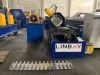
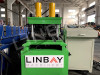
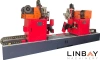
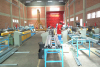
LINBAY specializes in roll forming solutions designed for the production of warehouse racking and logistics profiles.
Our equipment can be customized to manufacture a wide range of storage system components, including:
-
Rack uprights
-
Box beams
-
Step beams
-
Shelf panels
-
Custom structural profiles
With years of experience in roll forming technology, LINBAY helps manufacturers improve productivity, maintain consistent product quality, and meet the growing demands of the global storage industry.
Looking Ahead
As warehouses continue moving toward greater automation and higher storage density, the importance of reliable rack manufacturing will only increase.
Advanced storage technologies require equally advanced structural components. By combining intelligent warehousing concepts with precision roll forming solutions, manufacturers can better position themselves for the future of logistics.
LINBAY remains committed to supporting this transformation through innovative roll forming technology and professional manufacturing solutions for the storage and logistics sector.


Recent Posts

October 26, 2016
The Most Successful Engineering Contractor
20 Jan
Business Developing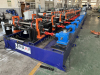
Contact US
Product Information
Quantity
Unit
Piece
Support order samples, customization, wholesale direct, and complete payment. If the product you look for does not have corresponding customized content, pls fill out the form below to contact us, and we will reply ASAP.